
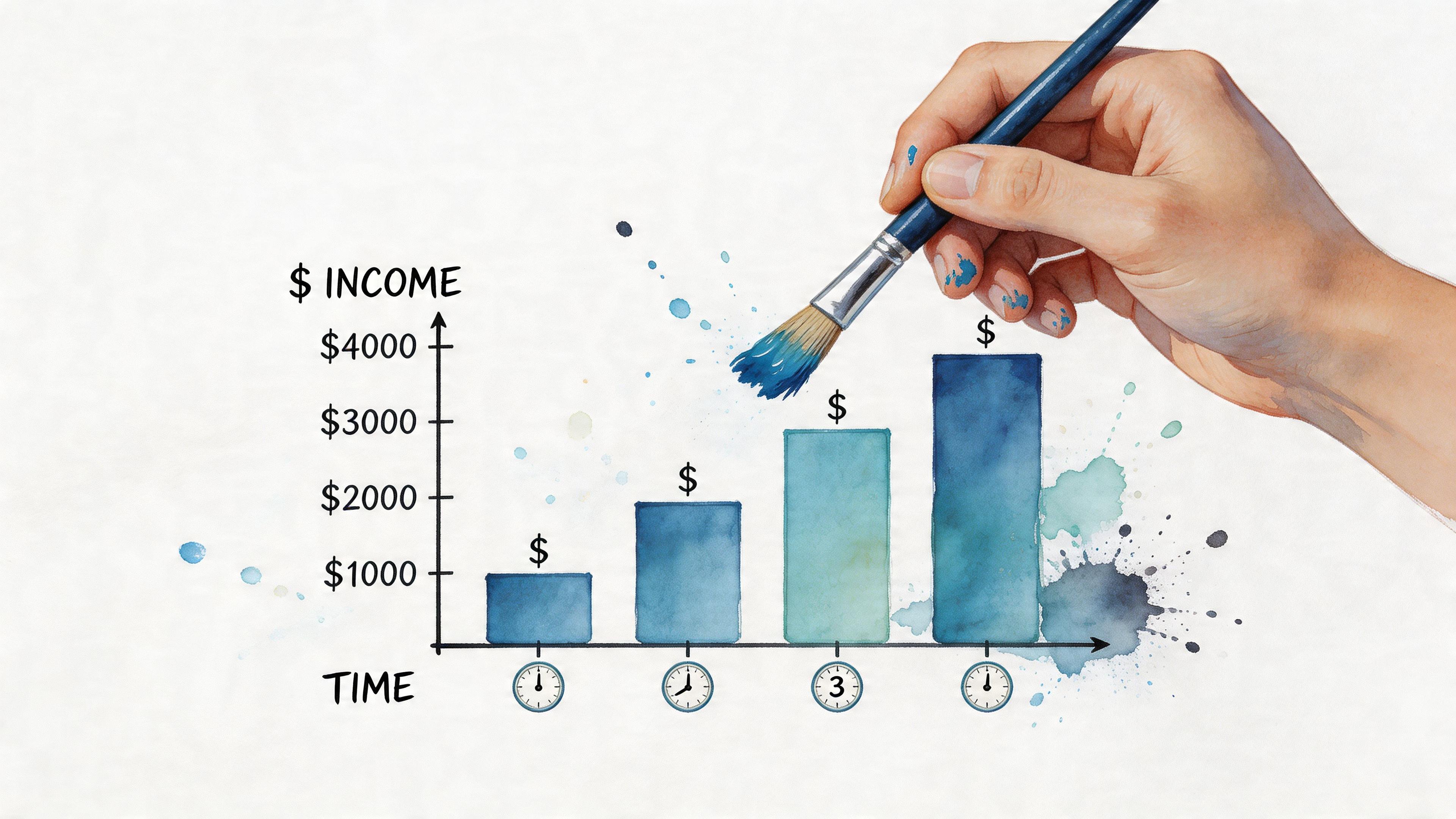
Yes, blogs still make money. In 2025, 21% of bloggers earned $100 to $1,000 monthly, while one established blogger reported $76,000 in net profit for the year, but 45% made less than $100 a month and 33% made nothing.
That mix of outcomes is the answer small business owners need. A blog isn't a slot machine, and it isn't a magic passive-income button. It's closer to building a digital storefront. You publish useful content, earn attention, build trust, and then turn that trust into revenue, leads, bookings, product sales, or referral income.
For service businesses and freelancers, that's where people often get confused. They ask, "Do blogs make money?" when the better question is, "Should my blog make money directly, or should it help my business make money?" Those are not the same strategy.
A local clinic, consultant, designer, or real estate agent usually gets more value from a blog that attracts the right prospects than from trying to squeeze a few ad dollars out of every visitor. On the other hand, a niche publisher with steady traffic may earn from ads, affiliate offers, sponsored content, or digital products.
The good news is that blogs still matter because people still read them. According to Matt Giaro's review of blogging profitability, 80% of internet users, or 4 out of 5, are regular blog readers, and that audience supports a content marketing industry worth $600 billion.
The Reality of Blog Monetization in 2026
Blog monetization in 2026 is achievable, but it works best when you treat the blog as a business asset instead of a side project.
That distinction matters for small businesses. A freelancer, consultant, or local service provider does not need a blog that gets casual clicks from anyone. They need a blog that brings in the right visitor, answers the right question, and leads that person toward an inquiry, booking, or sale.
A hobby blog often grows in random directions. One post targets beginners, the next chases a trend, and neither connects to a service or offer. A business blog works more like a well-trained sales assistant. It answers common questions, builds trust before the first call, and helps a reader take the next step.
Why blogs still work
Search behavior has not disappeared. Prospects still go online to compare options, learn how a service works, and look for proof that a provider knows what they are doing.
That creates an opportunity.
A useful article can keep attracting qualified readers long after you publish it. Unlike paid ads, you do not have to keep funding every visit one click at a time. For a service business, that makes blogging less like renting attention and more like building an asset you own.
Practical rule: Profit usually follows usefulness. If a post does not solve a real problem, it rarely creates real business value.
Why many blogs still earn little or nothing
Competition is heavy, and generic content disappears fast. Broad posts with vague advice rarely stand out in search or persuade a reader to act.
Time is the other hurdle. Blogging usually works slowly at first, then compounds. Many business owners quit during the quiet phase, before their content has built enough trust, search visibility, or topic authority to produce steady results.
That is why the right expectation matters. A blog is closer to planting an orchard than flipping a switch. Early work feels slow, but each useful post adds another chance to be found.
The right mental model for service businesses
If you run a service business, direct monetization is often the smaller opportunity.
Ads, affiliate links, and sponsorships can work well for publisher-style blogs built around large traffic numbers. A service business usually gets better returns by using the blog to generate leads. One article that brings in a single high-value client can outperform months of ad revenue on the same traffic.
Judge the blog by business outcomes such as:
- Better-fit leads who already understand your service
- Faster trust-building because prospects have read your advice before contacting you
- Higher-value projects because your content positions you as the specialist
- Stronger search visibility for the problems your buyers are already trying to solve
So yes, blogs can make money in 2026. For many freelancers and service-based small businesses, the smartest path is to use the blog to win clients first and add direct monetization later, if traffic volume makes that worthwhile.
Five Proven Ways Your Blog Can Make Money
A blog can earn in two very different ways. It can produce revenue on the page itself, or it can bring in leads that turn into clients. For service businesses and freelancers, that second path usually has the higher payoff.
Use this section like a menu, not a checklist. You do not need every method. You need the one that fits how your business makes money.
Display advertising
Display ads pay you for attention. Readers visit your article, ad units load on the page, and you earn a small amount from those impressions or clicks.
This model works best for publisher-style sites built to attract large traffic numbers across many articles. A local accountant, therapist, or web designer usually gets more value from a reader booking a consultation than from that same reader generating a few cents in ad revenue.
Ads can also create friction. If your goal is phone calls, form submissions, or appointment bookings, extra banners can pull attention away from the action you want.
For service businesses, display ads are usually a late-stage option. Add them after your blog already brings in steady traffic and after you are confident they will not reduce inquiries. If you want a realistic sense of timing, review how long SEO takes to show results, because ad income depends heavily on search traffic building over time.
Best for: Media-style blogs, niche publishers, information-heavy sites
Less ideal for: Agencies, consultants, clinics, local service providers
Affiliate marketing
Affiliate marketing pays you when a reader buys a product you recommend through a tracked link.
This method works best when your content helps someone choose a tool, platform, or resource. The key is fit. A generic recommendation feels like advertising. A specific recommendation inside a useful article feels like guidance.
Service businesses can use affiliate marketing in a focused way. A real estate agent might write about the tools buyers use to compare mortgage options. A bookkeeping firm might review accounting software for freelancers. A clinic might publish a post about telehealth equipment or wellness apps patients ask about, if those recommendations are relevant and appropriate for its audience.
The easiest test is simple. If you already recommend the product during client calls, it may also fit naturally in your blog content.
Good affiliate content helps the reader solve a problem first and introduces the product second.
Sponsored posts
Sponsored posts are paid articles created for a brand that wants access to your audience.
This option makes sense once your blog attracts a specific type of reader that companies want to reach. Sponsors care less about raw traffic than about audience match. A blog that reaches 2,000 ideal buyers can be more valuable than one that reaches 20,000 mixed visitors.
That is where service businesses can stand out. A small HR consultant with a blog for growing companies may be attractive to payroll software brands. A commercial real estate broker with content for investors may be attractive to property data platforms. A pediatric clinic with trusted family-health content may attract child-focused product brands, assuming sponsorships fit its standards and audience expectations.
DaedTech's guide to making money from tech blogs explains the logic well. Sponsors pay when the audience can realistically lead to sales.
Best for: Blogs with a clear niche and a defined reader profile
Needs: Consistent traffic, audience relevance, and a clear reason a sponsor should care
Selling your own products or services
For many freelancers and service-based small businesses, this is the strongest monetization method.
Your blog acts like a pre-sales conversation at scale. Each article answers questions, handles objections, and shows how you think. By the time a prospect contacts you, they are warmer, more informed, and often easier to close.
The offers can be simple. A consultant can sell strategy sessions. A designer can sell templates or retainers. A therapist can offer workshops. A career coach can sell resume reviews. A local law firm can use blog posts to bring in consultation requests for a specific practice area.
A strong example comes from this developer blogging case on YouTube. The creator built traffic with practical tutorials, then turned that trust into higher-value offers such as courses and ebooks. Service businesses can apply the same model without needing massive traffic. One article that brings in one qualified client can outperform months of ad income.
That is the core difference. Publishers usually need volume. Service businesses often need relevance.
Memberships and subscriptions
Memberships turn a one-time reader into a repeat customer.
Readers pay for ongoing access to something useful, such as premium articles, templates, monthly Q&A sessions, research updates, training, or a private community. This model works when your audience faces recurring problems and wants regular help.
For service professionals, memberships can support both revenue and client retention. A marketing consultant might offer monthly campaign reviews. A financial coach might provide a subscriber library and office hours. A nonprofit consultant might create a members-only training hub for grant writing teams.
This is usually not the first monetization method to launch. Start here after you know which topics readers return for and what kind of recurring support they will pay to keep receiving.
Comparing blog monetization methods
| Method | Income Potential | Effort Level | Best For |
|---|---|---|---|
| Display ads | Moderate to high with substantial traffic | Medium | Traffic-heavy publisher blogs |
| Affiliate marketing | Moderate to high when recommendations match intent | Medium | Educators, reviewers, niche experts |
| Sponsored posts | Moderate to high with a defined audience | Medium to high | Established niche blogs |
| Products or services | High because you keep more of the sale | High upfront, strong long-term payoff | Freelancers, consultants, service businesses |
| Memberships or subscriptions | Moderate to high with loyal readers | High | Specialized experts with repeat-value content |
A simple rule helps here. If you sell services, start by using your blog to attract and convert clients. Add affiliate offers where they help readers. Test sponsorships and ads later, once traffic is high enough and your lead flow is already working.
How Much You Can Realistically Make and How Long It Takes
About one-third of bloggers earn nothing in a given month, and many others earn very little. That sounds discouraging until you separate two very different goals: making money from the blog itself, or making money because the blog brings in clients.

What the income range actually looks like
For service-based businesses and freelancers, blog income often follows one of two paths.
The first path is direct monetization. That means ads, affiliate links, sponsorships, or subscriptions. This model usually needs meaningful traffic before the numbers become attractive. A blog can be useful long before it becomes a strong ad asset.
The second path is lead generation. That means your posts bring in consultation calls, project inquiries, email subscribers, or bookings. This is often the better early goal for consultants, agencies, coaches, accountants, designers, and local service providers, because one qualified lead can be worth far more than a month of display ad revenue.
A simple example makes the difference clear. If your blog gets 2,000 monthly visits, ads may produce little or no meaningful income. If that same traffic brings in one $1,500 client, the blog is already paying for itself.
As noted earlier, blogging income varies widely. Established publishers can grow revenue over several years, but that growth usually comes from consistent publishing, stronger search visibility, and a clear business model, not quick wins.
Traffic levels matter, but intent matters more
Traffic still matters. Ads and many affiliate programs depend on volume.
Client acquisition works differently. A family lawyer, therapist, bookkeeper, or brand strategist does not need hundreds of thousands of readers to see a return. They need the right person to land on the right article and take the next step.
That is why a small business blog with modest traffic can outperform a bigger general-interest blog on actual revenue. Broad traffic is like foot traffic past a storefront. Buyer-intent traffic is like someone walking in and asking for a quote.
How long before a blog makes meaningful money
A practical timeline for meaningful traction is often 12 to 24 months. Some businesses see early leads sooner, especially if they already have domain authority, a focused niche, or an email list. Direct monetization usually takes longer because traffic thresholds come first.
Search is part of the waiting period. Google needs time to crawl pages, understand topical relevance, and test where your content belongs in results. Readers also need repeated proof that you know your subject and can help them. Silva Marketing explains this well in their guide on how long SEO takes to show results.
A useful way to set expectations is to break the timeline into stages:
- Months 0 to 3: Publish core articles, set up service pages, and make sure every post points readers toward a clear next step.
- Months 3 to 6: Start seeing which topics get impressions, clicks, and inquiries. Early leads may appear here, especially for local and niche services.
- Months 6 to 12: Stronger posts begin ranking more consistently. This is often when service businesses can trace real client revenue back to blog content.
- Months 12 to 24: Traffic compounds, authority grows, and additional monetization options become realistic if you want them.
If you want examples of how consistent publishing supports that curve, studying strong small business blog examples and content strategies can help you compare your own pace and structure.
This video walkthrough gives a visual explanation of how blog income can build over time and why patience matters in the early stages:
Set the goal that matches your stage. Early on, success may mean publishing useful posts, getting your first inquiry, or building an email list. Later, it may mean enough traffic to add affiliates or ads without distracting from the bigger payoff, which is turning your blog into a steady source of leads and revenue.
Your Foundation for Profit Niche Selection and Traffic Growth
Most blogs don't have a monetization problem first. They have a focus problem.
If your content is too broad, you compete with everyone and connect with no one. If your niche is narrow and useful, your blog becomes easier to rank, easier to trust, and easier to monetize.

Narrow beats broad for small businesses
A freelancer shouldn't blog about "marketing." They should blog about the specific problems their ideal client pays to solve.
A real estate agent could focus on neighborhood-specific buying questions. A clinic could answer treatment concerns patients search before booking. A restaurant could publish content that supports local discovery, event traffic, and reservations.
Generic advice proves insufficient. As noted in this article on blog revenue streams for freelancers and service businesses, a personal finance blog may do well with ads, but a local medical clinic often gets more value from using content to build authority and drive bookings.
Pick a niche with business intent
The right niche sits at the overlap of three things:
- What your audience searches for before they hire, buy, or book
- What you can explain well from real experience
- What connects naturally to a service or offer
If you're stuck, study the articles on the Soloist blog and notice the common pattern. The strongest business content doesn't chase random traffic. It answers practical questions that lead toward action.
The best niche is rarely the biggest one. It's the one closest to revenue.
Traffic growth that actually matters
For service businesses, not all traffic is equal. Ten readers who need your help can matter more than a large audience with no buying intent.
Focus on content that does one of these jobs:
- Answer buying-stage questions such as cost, process, timelines, and comparisons.
- Resolve common objections that stop prospects from contacting you.
- Show local or niche expertise through examples, scenarios, and clear guidance.
- Point to a next step like a consultation, quote request, or booking.
SEO sounds technical, but the principle is simple. Publish the clearest page on the internet for the specific question your customer is already asking.
Get Started Launching and Monetizing Your Blog
Starting gets easier when you stop thinking about "becoming a blogger" and start thinking about publishing your first useful business asset.
A blog only needs a few things to begin well: a professional home, a clear niche, a way for readers to contact you, and a plan for consistent content. You don't need custom code or a long setup process.

A simple starting roadmap
Use this sequence if you're launching from scratch:
- Choose one audience. Don't write for "everyone." Write for one buyer type you already understand.
- Define one business goal. Pick lead generation, direct sales, or audience building as your primary outcome.
- Create core pages first. You need a homepage, about page, contact page, service or offer page, and blog.
- Publish a small starter library. Write articles that answer your most common customer questions.
- Add a conversion path. Every post should give readers a next step, even if it's just contacting you.
- Review performance monthly. Keep the topics that attract qualified interest. Improve the ones that almost work.
Monetize in the right order
Most small businesses should monetize in this order:
- First, win trust through clear and helpful articles
- Second, capture interest with forms, consultations, or email signups
- Third, sell the offer that solves the problem behind the search
- Later, layer in extras like affiliate offers or sponsorships if they fit
If you're building a self-employed income stream, this broader guide on how to make money working for yourself can help you think beyond one revenue source and build a more resilient business.
For examples of business website and content ideas, you can also browse the main Soloist site.
Keep the first version simple
Your first blog doesn't need to look like a major media brand. It needs to answer real questions and make it easy for a reader to become a customer.
That mindset saves a lot of wasted effort. Many owners spend weeks polishing design details when they should be writing the article that gets the first qualified inquiry.
Avoid These Common Mistakes That Derail Blog Revenue
The biggest mistake isn't poor writing. It's expecting the blog to pay off before it has enough time, content, and trust behind it.
That pattern shows up constantly. As explained in Chris G's discussion of blogging as passive income, many owners quit because they don't understand how long it takes for monetization to become viable. They stop before the blog has a real chance to work.
Mistakes that quietly kill momentum
- Chasing fast money: When you overload a new blog with ads or weak affiliate links, you trade trust for pennies.
- Writing without search intent: Good writing isn't enough if nobody is looking for the topic.
- Picking a niche you can't sustain: If you don't have experience, curiosity, or a business reason to keep going, consistency fades.
- Publishing inconsistently: Gaps usually come from discouragement, not laziness. The blog feels broken when results arrive slowly.
- Ignoring conversion paths: A helpful post with no next step leaves value on the table.
Most blogging failures aren't traffic failures first. They're expectation failures.
The better mindset
Treat the first stretch as an asset-building phase. You're creating content that can rank, earn trust, and support future revenue. That shift helps you make better decisions.
It also keeps you from comparing your month three blog to someone else's year five business.
Common Questions About Making Money From Your Blog
A better way to use this section is as a decision guide, not a repeat of the article. The key question for small business owners is rarely "Can blogs make money?" It is "What kind of money should this blog be built to produce?"
Can a small blog make money?
Yes, but the path matters.
A small blog usually will not produce meaningful ad income. It can still produce meaningful business income if a few posts bring in qualified leads, consultation requests, or project inquiries. For a freelancer, one client from a well-targeted post can outperform months of display ad earnings.
A good test is simple. If a reader lands on the post and thinks, "This business understands my problem," the blog is already doing paid work for you.
Is ad revenue the best goal for a local business blog?
For most local businesses, no.
Ads fit a publisher model. Local service businesses usually need a client acquisition model. A plumber, bookkeeper, designer, or family law attorney will often get far more value from one booked job than from thousands of ad impressions.
Use this rule of thumb. If your average customer is worth more than a small stream of ad clicks, your blog should be built like a sales assistant, not a media property.
What's the best monetization method for freelancers?
Start with the offer you already sell.
For most freelancers, the strongest first model is service-led content. That means writing posts that answer buying-stage questions such as pricing, timelines, deliverables, mistakes to avoid, or platform comparisons. Those topics attract readers who are closer to hiring, not just browsing.
Later, you can layer in other income streams. Templates fit writers and designers well. Mini-courses fit coaches and consultants. Affiliate recommendations fit posts where tools are already part of the solution. The order matters. Services usually monetize first because trust transfers faster than traffic.
How many posts do I need before I can make money?
There is no fixed number, but there is a practical threshold.
A blog with five random posts often behaves like a brochure. A blog with ten to twenty focused posts around one service, one audience, and a few high-intent questions starts to act more like a lead engine. The shift happens when your content begins covering a topic cluster instead of isolated ideas.
Put another way, one strong article can open the door. A small library of related articles helps a prospect walk through it.
Should I wait to monetize until traffic grows?
Only if your monetization model depends on volume.
Ad networks and many sponsorships need larger traffic numbers to matter. Lead generation does not. If you sell services, you should add contact forms, booking options, and offer mentions early because even low traffic can convert when the reader has a clear need.
Waiting too long creates a common problem. The blog attracts attention, but readers have no obvious next step.
What kind of content works best?
Content works best when it matches a business decision already happening in the reader's head.
For service businesses and freelancers, strong formats often include price guides, service comparisons, process explainers, "best fit" articles, local problem-solving pages, and posts that answer questions people ask right before they reach out. Those topics do more than attract visits. They pre-qualify prospects.
Educational content at the top of the funnel still has value, but buyer-intent content usually produces revenue sooner.
What should I track if I care about revenue, not vanity metrics?
Track four things first. Organic visits, inquiry rate, booked calls, and closed revenue from blog-assisted leads.
Pageviews alone can be misleading. A post with lower traffic can be more profitable if it attracts people who are ready to buy. For a service business, that makes conversion quality more useful than raw volume.
How long until a blog starts paying off for a service business?
Service businesses often see the earliest financial return before they see large traffic numbers.
That happens because one useful article can bring in a qualified lead before the blog looks "big." Ad-based income usually takes longer because it depends on scale. Lead-based income can start earlier if the post addresses a clear buying question and leads to a simple next step.
If you want to turn a blog into a real business asset without getting stuck on design, setup, or technical steps, Solo AI Website Creator is a practical place to start. It helps you launch a professional site quickly, with SEO tools, forms, booking features, analytics integration, and the core structure you need to publish useful content and turn readers into leads.