
How to Write an About Us Page: A Guide to Connecting and Converting
This article was assisted with AI. We may include links to partners.
Your About Us page is so much more than a simple corporate bio. It’s where you get to tell your story, build real trust, and give potential customers a compelling reason to choose you. This is your chance to answer the "why" behind your brand, weaving your mission, values, and unique history into a narrative that truly connects.
Done right, this page transforms from a simple formality into one of your most powerful tools for turning visitors into loyal fans.
Your About Us Page Is a Hidden Conversion Engine
Let's be honest—most businesses treat their About Us page as an afterthought. It's often a dry, dusty timeline of company milestones or a list of corporate jargon. But what if you started thinking of it as your secret weapon for building trust and driving sales?
For many visitors, this is the last stop they make before deciding whether to buy from you, partner with you, or click away forever.
A great About Us page answers the one crucial question burning in every potential customer's mind: "Why should I choose you over everyone else?" It’s your opportunity to go beyond what you sell and share who you are. This is where a genuine story can turn skeptical visitors into enthusiastic customers.
Turning Storytelling Into Sales
Instead of just a biography, think of this page as a powerful conversion tool. Its real job is to persuade visitors to take that next step. And the data backs this up.
Well-optimized pages that tell a clear, compelling story have a significant impact on visitor behavior. Across all industries, the median landing page conversion rate sits around 6.6%, but the top performers? They're converting at rates above 11%. That's proof that a compelling brand story directly impacts your bottom line.
Actionable Tip: A well-crafted About Us page doesn't just inform; it connects. It builds the emotional bridge between a visitor's problem and your solution, making the decision to purchase feel natural and right.
This guide will break down exactly how to craft a narrative that gets this done. We'll explore the key components that elevate a simple bio into a page that drives real action. And if you're new to the concept, understanding what is website conversion is a great place to start.
Core Components of a High-Converting About Us Page
Before we start writing, let's lay the groundwork. Here are the essential building blocks every effective About Us page needs. Each piece serves a specific purpose in building trust and encouraging action.
| Component | Purpose | Why It Matters |
|---|---|---|
| Authentic Origin Story | Explains the "why" behind your business, sharing the initial problem or passion that sparked its creation. | Humanizes your brand and makes it relatable, showing that real people with a real mission are behind the logo. |
| Clear Mission & Values | Defines what your company stands for beyond making a profit and what principles guide your decisions. | Attracts customers who share your values, creating a stronger, more loyal customer base. |
| Introduction to the Team | Puts a face to the name, showcasing the people who make your business run every day. | Builds trust by showing transparency and highlighting the expertise and personality of your team. |
| A Compelling Call-to-Action (CTA) | Guides the visitor on what to do next, whether it’s exploring products, contacting you, or joining your community. | Turns passive readers into active participants, moving them further down the sales funnel. |
Think of these components as the ingredients for a recipe. Each one adds a crucial flavor that, when combined, creates a page that not only tells your story but also convinces visitors that you're the right choice for them.
Finding Your Unique Story Before You Write
Before you even think about typing a single word, you need a plan. The best About Us pages aren't just thrown together; they're built on a real understanding of who you are and what you stand for. This is where you dig in and find the one-of-a-kind story that only your brand can tell.
So many businesses make the classic mistake of jumping right into writing. They list out company milestones, spout some facts, and call it a day. But that completely misses the point. A great About Us page is your chance to turn a skeptical visitor into a loyal customer, and that journey starts with a compelling story.
Think of it this way: your story is the bridge that connects someone's initial doubt to their eventual trust and purchase.
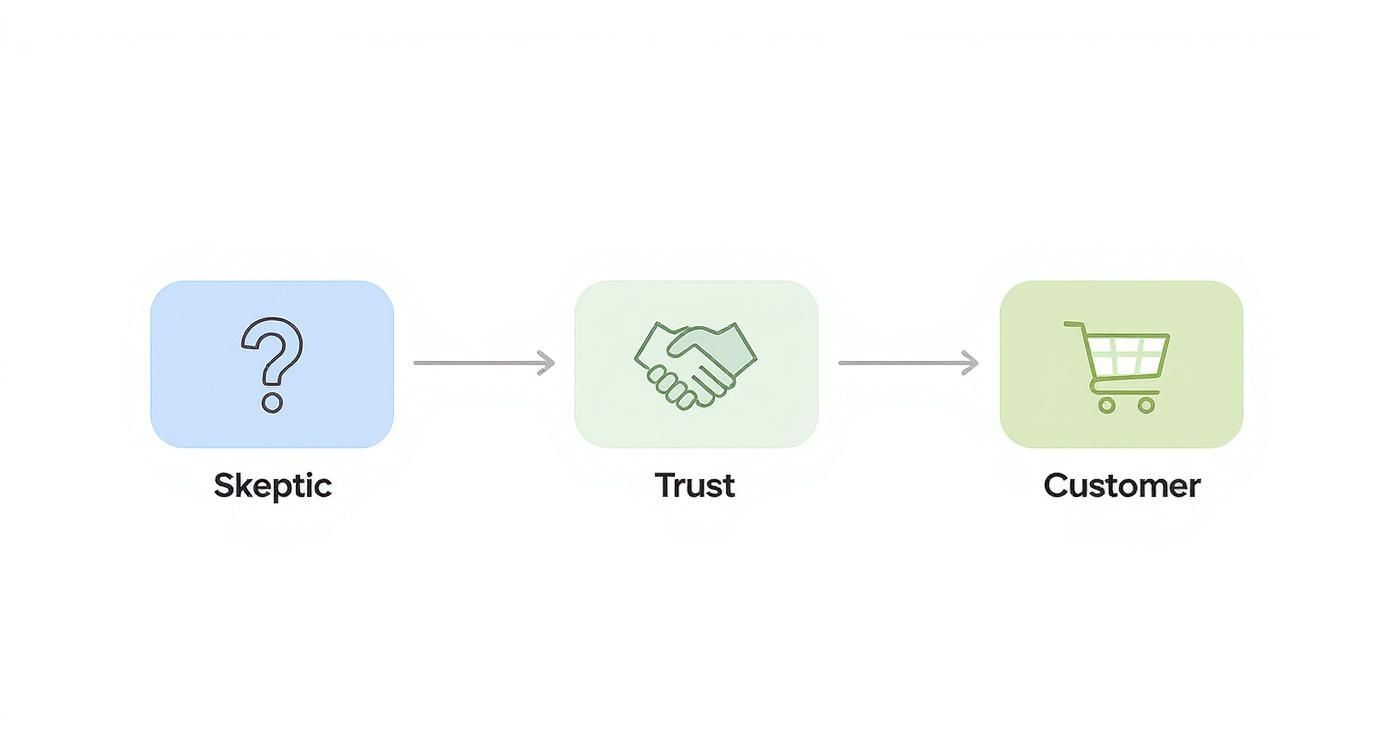
Trust is the key ingredient here, and your story is what builds it. The goal isn't just to spit out information—it's to connect on a human level. It's about making your business feel like the only choice that makes sense.
Define Your Page's Primary Goal
First things first, what do you actually want this page to do? Is the main goal to reel in sales leads? Attract top-tier talent to your team? Or maybe you're trying to get noticed by the press. The goal you choose will dictate every sentence you write.
For instance, a page aiming to attract new hires will play up your company culture, team events, and opportunities for growth. On the other hand, a page focused on sales needs to zero in on customer pain points and how you solve them better than anyone else. Sticking to one primary objective keeps the page from feeling scattered and weak.
Actionable Tip: Your About Us page can’t be everything to everyone. Pick one primary objective—whether it's building trust with customers or attracting investors—and let that goal guide your storytelling.
Identify Your Target Audience
Okay, you have a goal. Now, who are you talking to? What do these people actually care about? What problems are keeping them up at night? Research shows that a whopping 64% of people will choose a brand because it shares their values, so speaking their language isn't just nice—it's essential.
Don't just scratch the surface with demographics like age and location. Go deeper. What are their motivations, their biggest frustrations, their secret aspirations? Sketch out a quick persona to keep in mind:
- Who are they? (e.g., A busy freelance graphic designer)
- What problem do they face? (e.g., Constantly juggling clients and drowning in project management chaos)
- What are their core values? (e.g., They value creativity, efficiency, and a healthy work-life balance)
This little exercise makes sure your story lands because it’s written for the person you're trying to reach. It’s a key step in learning how to create a brand that connects on a deeper level. For example, we know the Solo AI Website Creator is made for entrepreneurs who crave speed and simplicity—that single insight would shape our entire About Us story, turning a list of features into a relatable narrative.
Crafting a Narrative That Resonates
Okay, you've done the foundational work. You know why you're telling your story and who you're telling it to. Now comes the fun part: turning those ideas into a narrative that actually connects with people.
A great About Us page is not a dry timeline of your company's history. Please, don't just list dates and milestones. This is your chance to turn facts into a feeling, building trust one sentence at a time. The best way to do this? Think like a storyteller, not a corporate biographer.
Your narrative needs a clear beginning, middle, and end. It should take the reader on a mini-journey that starts by grabbing their attention, builds a real connection through shared values, and ends by showing them exactly why you're the right choice to help them.

Hook Your Reader Immediately
Your first sentence is everything. You have just a few seconds to give a visitor a reason to keep reading. Forget the generic "Welcome to our company." Start with a hook that hits on a need or an emotion.
You could try a relatable question, a bold statement about your industry, or a quick glimpse into the problem that sparked your business in the first place. For instance, a company selling productivity software could open with, "Ever feel like your to-do list is winning the war for your attention?" It creates an instant connection and makes the reader feel seen.
Actionable Tip: Your opening shouldn't introduce your company; it should introduce the problem your company solves. By starting with the customer's world, you instantly make your story relevant to them.
Share Your Origin Story with Purpose
Every business has a beginning, but the trick is to tell it with a clear purpose. Don't just tick off the year you were founded or the milestones you've hit. Frame your journey around the central problem you were determined to solve. This is where the heart of your narrative lives.
Zero in on the "why" behind your business:
- The Spark: What was that specific moment of frustration or inspiration that started it all?
- The Struggle: What hurdles did you have to overcome? Showing a little vulnerability makes your brand feel much more human.
- The Solution: How did you finally arrive at the product or service you offer today? Position it as the clear answer to that initial problem.
This approach transforms a boring history lesson into a powerful story of passion and grit. Once you know your unique story, using a practical brand storytelling framework can help you structure it for maximum impact.
Humanize Your Brand by Introducing Your Team
People connect with other people, not with faceless logos. Introducing your team is one of the fastest ways to build trust and inject some personality into your page. Go beyond a name and a job title. Share a fun fact, a personal passion, or a quick quote about why they love doing what they do.
These little details make your team feel like real, approachable people. For a tool like the Solo AI Website Creator, this might mean featuring the designers and engineers who are genuinely passionate about helping small businesses get online. It proves there are dedicated humans behind the tech.
This narrative-first thinking has a direct impact on conversions, too. Data on user engagement shows that how long and how clear your copy is really does affect sales. For software companies, landing pages with simple, easy-to-read copy convert an incredible 514% better than pages with complex jargon. Keeping your story concise and focused—usually somewhere between 250 and 725 words—is proven to work best.
Optimizing Your Page for People and Search
A brilliant story is worthless if no one ever finds it. This is where you connect the dots between creative writing and smart marketing, making sure your About Us page actually works for your business. The goal is a page that's as easy for search engines to find as it is for people to read and love.
This isn't about stuffing your page with keywords. It's about making your content accessible, scannable, and genuinely valuable to both your human visitors and the search bots crawling your site. When you optimize for people first, you almost always end up creating something that search engines reward anyway.

Ultimately, great optimization turns your page from a simple bio into a real business asset—one that pulls in the right audience and points them toward taking action.
Making Your Page Easy To Read
Let's be honest: people don't read websites; they scan them. A huge wall of text is the fastest way to send someone clicking the 'back' button. To keep them engaged, you need to structure your content for maximum scannability.
Think about how you're reading this article. Short paragraphs, clear headings, and visual breaks make the information much easier to digest. Your About Us page needs that same treatment.
- Use Short Paragraphs: Keep every paragraph to just one to three sentences. This creates breathing room and makes your story feel way less intimidating.
- Write Clear Headings: Break up your story with descriptive subheadings (like the ones here). This helps readers jump to the parts they care about most.
- Incorporate Bullet Points: Listing your company values, team members, or key milestones? Use bullet points. They’re perfect for delivering information quickly and clearly.
These simple formatting tweaks make a massive difference in how long visitors stick around and how much of your story they actually absorb.
Optimizing For Search Engines
To get your About Us page found, you have to implement some solid Search Engine Optimisation strategies. This is all about helping Google understand what your page is about so it can show it to the right people.
Start by weaving in relevant keywords naturally. If you're a "custom ceramic artist in Austin," make sure that phrase pops up in your headings and text. The key is to make it sound like a human wrote it, not a robot. The Solo AI Website Creator, for example, would naturally include terms like "AI website creator for small businesses" to pull in its target audience.
Next, give some attention to your title tag and meta description. These are the small pieces of text people see in Google search results.
Actionable Tip: Your meta description is your 160-character elevator pitch. It doesn't directly boost your ranking, but a compelling one convinces people to click your link instead of a competitor's.
About Us Page SEO Checklist
To help you get this right, here’s a quick checklist that covers the most important SEO tactics for your About Us page. Think of it as a roadmap to getting found.
| Optimization Tactic | Actionable Tip | Impact |
|---|---|---|
| Keyword Integration | Naturally include your primary and secondary keywords in headings (H1, H2s) and body text. Focus on what a user would actually search for. | Helps search engines understand the page's topic and rank it for relevant queries. |
| Title Tag Optimization | Create a unique title under 60 characters. Include your brand name and a key descriptor, like "About [Your Brand] | Our Story & Mission". |
| Meta Description | Write a compelling summary under 160 characters. Treat it like an ad to entice clicks. | Doesn't directly affect ranking but significantly boosts click-through rate (CTR). |
| Internal Linking | Link to other important pages on your site, like your services, products, or contact page. Use descriptive anchor text. | Distributes "link equity" across your site and guides users to other valuable content. |
| Image Alt Text | Describe your images in the alt text field. Use it as another opportunity to include relevant keywords. | Improves accessibility and helps your images rank in Google Images search. |
| URL Structure | Keep your URL simple and descriptive, like yourwebsite.com/about-us. Avoid long strings of numbers or random characters. |
A clean URL is easier for both users and search engines to understand. |
Working through this list ensures you've covered the fundamentals, giving your page the best possible chance to rank well and attract organic traffic.
Adding A Clear Call To Action
Finally, every About Us page needs a clear Call to Action (CTA). After you've made a connection with your story, visitors should know exactly what to do next. Don't leave them hanging.
Your CTA could be anything from "Explore Our Services" to "Meet the Team" or "Shop Our Best-Sellers." The important thing is that it's direct and guides them deeper into your website. Globally, the average landing page conversion rate is around 2.35%, but well-optimized pages can hit 5.31% or even higher. A strong CTA is a huge part of that success.
Common About Us Page Mistakes to Avoid
Even with the best game plan, it's surprisingly easy to stumble into common traps when putting together an About Us page. We've seen it time and time again: a compelling narrative gets pushed aside by bad habits that just kill any chance of connection and trust.
Honestly, sidestepping these mistakes is just as critical as getting the good stuff right. So many businesses create pages that are either way too self-absorbed or completely forget a real person is on the other side of the screen. Let's walk through the most common missteps and how to fix them.
Forgetting Who the Page Is Really For
This is the big one. The single biggest mistake is making the page all about you. I know, it sounds backward—it is the "About Us" page, after all—but your story only matters if it connects to what your customer actually needs or wants.
Every visitor is silently asking, "What's in it for me?"
Instead of just rattling off company milestones, try framing your journey around the problem you solve for them. Tweak your perspective from "we were founded in 2018" to "we started in 2018 because we saw too many entrepreneurs struggling with…" That tiny shift puts the customer back in the center of the story, making it instantly more relevant.
Drowning in Corporate Jargon
Another classic pitfall is leaning on vague, stiff, corporate-speak. Phrases like "synergistic solutions" or "paradigm-shifting platforms" don't mean anything to real people. This kind of language just builds a wall, making your brand feel cold and out of touch.
Your goal here is to sound human. Just write like you talk.
Actionable Tip: Read your draft out loud. Seriously. If it sounds like something you’d never actually say to another person, it’s time for a rewrite. Swapping just a few buzzwords for simpler terms can make a world of difference in how relatable you sound.
Creating a Wall of Text
Let's be real: people don't read websites, they scan them. A giant, unbroken block of text is visually exhausting and is the fastest way to get someone to hit the back button. Your story could be incredible, but if it's presented as a dense wall of words, nobody's going to stick around to read it.
You have to break up your content to make it easy to digest.
- Short Paragraphs: Aim for no more than two or three sentences per paragraph.
- Clear Headings: Use subheadings to act as signposts, guiding the reader through the different parts of your story.
- Visuals: Nothing breaks up text and adds personality like a few photos of your team, your workspace, or even your office dog.
This isn't just about making things look pretty; it's about respecting your reader's time. Formatting for scannability ensures your message actually gets across.
Neglecting the Call to Action
Finally, a surprising number of About Us pages just… end. They tell a great story, build a genuine connection, and then leave the visitor hanging with nowhere to go. This is such a massive missed opportunity. You've just earned their interest and trust—now give them a next step!
Every single About Us page needs a clear, compelling Call to Action (CTA). It doesn't have to be a hard sell. It could be a simple invitation to check out your products, sign up for your newsletter, or follow your journey on social media. The point is to provide a logical next step that keeps them engaged and moves the relationship forward.
Still Have Questions About Your About Us Page?
It's one thing to read a guide, but it's another to sit down with a blank page. A few questions always seem to pop up right when you're ready to start writing. Let's tackle the most common ones so you can get unstuck and hit "publish" with confidence.
Think of this as your final check-in before the page goes live.
How Long Should My About Us Page Be?
There’s no magic number, but you’re generally in a good place between 300 and 500 words. That gives you enough room to tell a compelling story without making your visitors' eyes glaze over.
Let's be real: people scan websites. If your page is too short, it can feel a bit flimsy and untrustworthy. Too long, and you risk it never getting read at all. The goal is to be concise but impactful.
Actionable Tip: Aim for clarity over length. A powerful 300-word story that connects with your audience is far more effective than a rambling 1,000-word essay that doesn't.
How Do I Write About Myself as a Solopreneur?
Writing about yourself can feel… awkward. I get it. But as a solopreneur, your personal story is your biggest asset. You are the brand. Don't shy away from it—lean in and use the first person ("I" and "my") to forge a genuine, personal connection.
Hit these key points:
- Your "Why": What personal passion or nagging frustration made you start this business? Share the story behind it. What's the problem you feel uniquely driven to solve?
- Your Expertise: Briefly touch on your background. Why are you the perfect person to be doing this? You don't need to list your whole resume, just the relevant highlights that build trust.
- Your Personality: Let people see the real you. Are you quirky and creative? Analytical and serious? Your page is the perfect place to attract the kind of clients you'll absolutely love working with.
What Should I Include If My Company Is Brand New?
No history? No problem. If you're a new company, your About Us page isn't about the past—it's about the future. You're selling the vision, the passion, and the mission.
This is your chance to frame your newness as an advantage. Talk about the gap you saw in the industry and how your fresh approach is designed to fill it. Introduce the founding team, their expertise, and the energy you're bringing to the table. You're not telling a story about history; you're telling one about innovation.
Ready to turn your story into a stunning website? The Solo AI Website Creator makes it easy to build a professional online presence in minutes, with no technical skills required. Get started for free and bring your brand to life today.