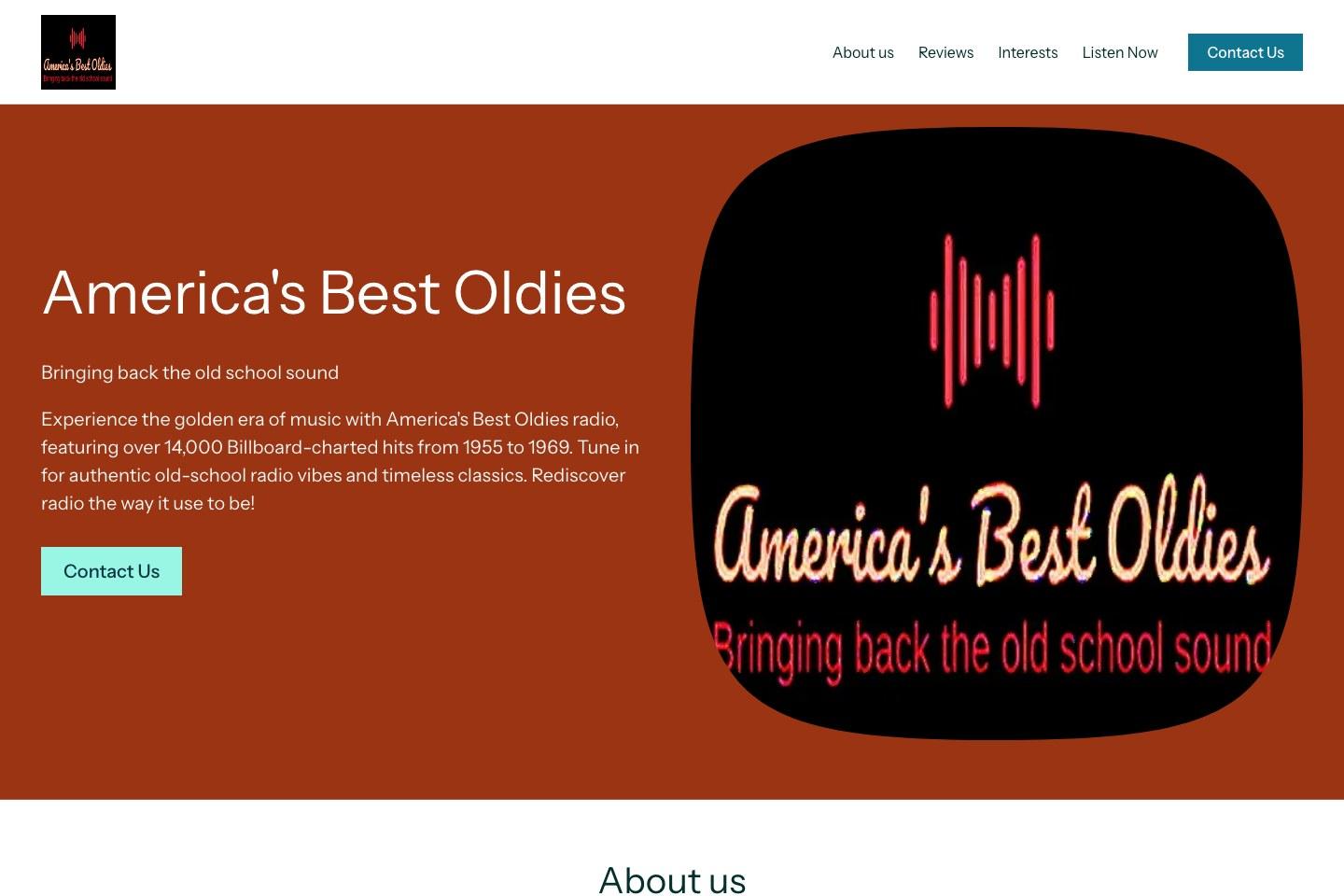
America's Best Oldies is an internet radio station built around old-school sound. The station needed a site that could explain what it plays and give listeners a place to learn more or tune in.
The submission was simple: there was no emergency, just a station that needed a web home. For a small media project, presence is a real use case.
A home base for the station
Jimmy Dee chose Solo to see what it would produce and came away surprised and pleased. For a radio station, the first version of a site needs to answer basic questions quickly: what is this, why should I listen, and where do I go next?
The page does that job directly. It presents the station name, the oldies positioning, and a listener-facing path without burying the offer in a complicated layout.
Presence while the audience grows
The station has not tied a listener spike to the site, but it continues to grow day by day. The website gives that growth a stable brand link.
Solo took what I thought I wanted and gave me exactly what I wanted.
A steady link for listener discovery
An internet radio station often lives wherever listeners already are: streaming apps, social links, and word of mouth. A website gives those loose pieces a stable brand home. It can explain the station quickly and give new listeners a place to start.
America’s Best Oldies is still growing listener by listener. The site gives Jimmy Dee a public identity to point to whenever someone asks what the station is and how to find it again.
The station now has a link for profiles, messages, and listener referrals, so the brand is not dependent on one platform or one streaming destination.
The music lives in the stream, but the brand needs a place people can remember and share.
The page also gives the station somewhere to send people who hear about it away from the stream. A listener can come back later, share the station name, or use the site as a reminder of what makes the brand different.
See the live website at America's Best Oldies.