
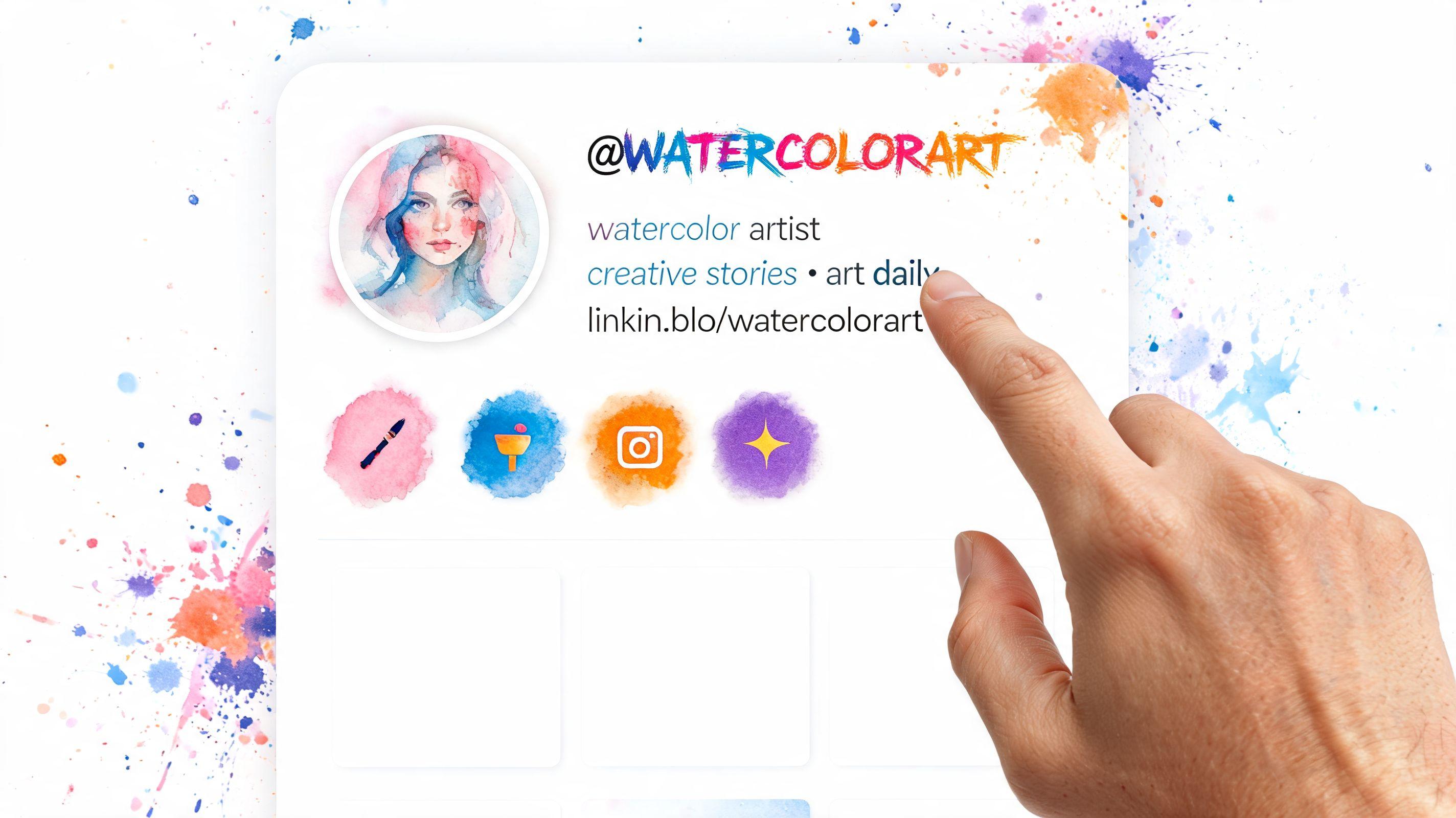
You post regularly. You care about your business. But when you look at your Instagram feed, it feels scattered. One post sounds polished, the next sounds casual. Your colors shift. Your bio is vague. People might follow, but they don’t always understand what you do, who you help, or what they should do next.
That’s the key challenge with branding on instagram. It isn’t just about looking nice. It’s about making your business recognizable, trustworthy, and easy to act on.
A strong Instagram brand helps people connect the dots fast. They should land on your profile and immediately understand your style, your offer, and your point of view. Then they should be able to move from interest to inquiry without friction. That’s where most small businesses get stuck. They spend time on posts but not enough on the brand system behind those posts.
Your Instagram Brand Is More Than Just Pretty Pictures
Instagram is too important to treat like a casual side channel. It has over 3 billion monthly active users, and 90% of users follow at least one business account, according to Hootsuite’s Instagram statistics roundup. That means people on the platform aren’t just scrolling for entertainment. Many are already open to hearing from brands.
For a small business owner, that changes the job. You’re not posting to fill space. You’re building familiarity. You’re helping people recognize your business quickly and remember it later.
A lot of accounts fail here because they confuse activity with branding. They post often, but nothing ties together. Their feed looks like five different businesses sharing one login. Their captions sound inconsistent. Their call to action changes every few days. Followers may see the content, but they don’t build a clear picture of the brand.
Branding on instagram works when someone can recognize your business before they even read your username.
That’s why the visual side matters, but it’s only one layer. Your brand also includes your tone, the promises you make, the topics you repeat, and the path you give people once they’re ready to learn more.
If you run a local or service business, this matters even more. Trades, clinics, consultants, creatives, and real estate professionals often rely on trust signals before a customer ever makes contact. If you want a practical outside look at building an online community for trades, that resource gives useful context on how consistent interaction supports business growth.
Here’s the working definition I use with clients:
- Brand is recognition: People know it’s you.
- Brand is clarity: People know what you do.
- Brand is trust: People believe you can help.
- Brand is direction: People know what to do next.
If one of those is missing, your Instagram presence feels busy instead of effective.
Build Your Brand Foundation with an Optimized Profile
Your profile is your storefront. Before anyone reads a caption, they judge the basics. If those basics are weak, even good content has to work harder.

Choose a username people can find
Your username should be searchable, readable, and close to your actual business name. If your business name is taken, add a simple location or service word. Don’t stuff in extra punctuation, random abbreviations, or trendy filler words that age badly.
Do this: @oakstreetdental or @oakstreetdentalphx
Not that: @oakstreet_dental_official_2026
People need to be able to remember it after hearing it once.
Use a profile photo that survives the tiny circle
Most profile photos fail because they’re too detailed. A full body shot, a busy logo, or a low-contrast image disappears at small size. Keep it simple.
For most businesses, one of these works best:
- A clean logo mark: Best when your logo is already recognizable.
- A face-forward portrait: Strong for freelancers, coaches, agents, and service providers.
- A high-contrast crop: Helps the image stand out on mobile.
If you’re still tightening up the basics of your visual system, Solo’s guide on how to create a brand identity is useful for aligning your logo, voice, and colors before you refine Instagram.
Write a bio like a mini pitch
Your bio doesn’t need clever wordplay. It needs clarity. In a few short lines, answer three questions:
- Who do you help
- What do you help them do
- What should they do next
A strong bio often includes a specialty, a location if relevant, and one clear next step.
Do this: Helping busy homeowners design low-maintenance outdoor spaces. Melbourne-based. Book a consult below.
Not that: Dreaming in green. Creating magic every day. DM for vibes.
That second version may sound nice, but it doesn’t tell a buyer enough.
Practical rule: If a stranger can’t explain your business back to you after reading your bio, rewrite it.
Turn story highlights into a navigation bar
Highlights are often wasted on random leftovers. Use them like menu tabs for new visitors. Keep the titles short and useful.
Good highlight categories include:
- Services
- Results
- Reviews
- About
- FAQ
- Behind the scenes
For a clinic, “Treatments” works better than “Stuff.” For a photographer, “Weddings” works better than “Favs.” For a consultant, “Client Wins” works better than “Love This.”
A profile should make a strong first impression without forcing people to hunt for context.
Create a Cohesive Visual Identity
Visual identity isn’t about becoming a designer. It’s about making decisions once so you don’t have to improvise every time you post.

A scattered feed usually comes from random choices. Different filters. Different text styles. Different background colors. Different layout logic. The fix is a simple visual system.
Build a small set of repeatable rules
Start with these:
- Choose 3 to 5 brand colors: Save the exact hex codes in one note.
- Pick 1 or 2 fonts: One for headlines, one for body text is enough.
- Select image rules: Bright and airy, warm and earthy, bold and high contrast. Keep one direction.
- Use the same editing style: Similar brightness, contrast, and crop style across posts.
According to Sprout Social’s Instagram branding guide, maintaining a consistent color palette across your Instagram feed and website can significantly increase brand recognition and user engagement rates. That matters because recognition lowers friction. People are more likely to trust what feels familiar.
Use templates instead of starting from scratch
Canva is enough for most small businesses. Build a few templates and reuse them.
Make templates for:
- Quote or insight posts
- Educational carousels
- Announcements
- Testimonials
- Story slides
Your templates shouldn’t all look identical. They should look related. Think “same brand family,” not “copied and pasted forever.”
For businesses that rely on styled visuals, lookbooks, or model imagery, tools like an ai fashion model generator can help create more consistent presentation assets. The key is not the tool itself. The key is keeping the output aligned with your brand rules.
Think in feed rhythm, not single-post perfection
Many owners obsess over one post and ignore the full grid. Your audience experiences both. The single post has to work in the feed, but your grid should also feel coherent when someone visits your profile.
A practical approach:
| Visual element | Keep it consistent by doing this |
|---|---|
| Colors | Reuse the same core palette in graphics, covers, and highlight icons |
| Typography | Use the same headline font and spacing rules |
| Photography | Stick to one editing style and similar framing |
| Graphics | Repeat 2 to 3 layout formats instead of inventing new ones |
| Covers | Make carousel and Reel covers look like they belong together |
You don’t need a perfect checkerboard layout. In fact, forcing that often hurts content quality. You do need a feed where every post looks like it came from the same business.
If your website feels calm and minimal but your Instagram is loud and chaotic, the brand breaks in half.
That’s why visual consistency can’t stop at Instagram. The same palette, type choices, and mood should show up anywhere someone finds you online.
Map Your Content Pillars and Posting Workflow
The biggest daily problem isn’t design. It’s staring at your phone and thinking, “What am I supposed to post today?”
Content pillars solve that. They’re the few recurring themes your brand talks about again and again. Most businesses only need 3 to 5 strong pillars. That keeps your content focused without making it repetitive.
This matters especially for non-product businesses. According to Shopify’s service-based business guide, service-based businesses account for 37% of new brand accounts, which means more businesses need branding on instagram that builds trust without relying on physical product photos.
Pick pillars that support trust
Good content pillars answer buyer questions before they ask them. For service businesses, these usually work better than generic inspiration posts.
Try a mix like this:
- Education: Teach what clients need to know.
- Proof: Show reviews, results, testimonials, or process snapshots.
- Personality: Share values, voice, behind-the-scenes moments.
- Offer: Explain services, packages, booking details, next steps.
- Community: Highlight clients, partners, local context, common questions.
Not every business needs all five. A therapist, for example, may lean heavily on education and trust-building. A realtor may need more proof and local insight. A clinic may balance education, process clarity, and reviews.
Content Pillar Ideas for Service-Based Businesses
| Content Pillar | Post Idea Example (Feed) | Story Idea Example |
|---|---|---|
| Education | A carousel explaining a common client mistake and how to avoid it | Quick Q&A box on the same topic |
| Proof | A testimonial graphic or before-and-after style result summary | Share a client review with a short reaction |
| Personality | Founder story, team values, or why the business was started | Behind-the-scenes clips from your day |
| Offer | A post breaking down one service and who it’s for | Poll about what people need help with |
| Community | Local partnership spotlight or client feature | Repost tagged content and answer follow-up questions |
Translate expertise into visual content
A lot of service providers think they have “nothing visual” to post. That usually means they’re defining visual too narrowly. You don’t need a product shelf to build a recognizable brand.
For example:
- Consultants can turn frameworks into carousels.
- Coaches can post client mindset shifts, prompts, and FAQs.
- Medical clinics can explain procedures, prep steps, and common concerns.
- Real estate agents can share neighborhood insights, buying myths, and listing process tips.
- Non-profits can show mission stories, volunteer highlights, and community impact moments.
What doesn’t work is copying e-commerce content formats that don’t fit your business. If you don’t sell a highly visual product, don’t force product-style posts. Lead with clarity, proof, and useful perspective instead.
Batch your workflow so you stay consistent
Consistency doesn’t come from motivation. It comes from a repeatable workflow.
A simple weekly process:
- Plan topics in one sitting: Choose your posts based on pillars.
- Write captions in a second block: It’s faster when you stay in writing mode.
- Design all graphics together: Reuse templates.
- Schedule or save drafts: Reduce day-to-day friction.
- Leave room for live content: Stories, quick updates, or timely moments.
If you only have limited time, don’t try to be everywhere on Instagram. It’s better to publish a smaller amount of clear, on-brand content than to flood your account with rushed ideas.
Craft Captions and Hashtags That Convert
A good visual gets attention. A good caption turns that attention into action.
Most weak captions have the same problem. They describe the post instead of advancing the relationship. “New post.” “Happy Monday.” “We loved working on this.” That kind of copy fills space but doesn’t build trust, curiosity, or response.
Find a voice people can recognize
Your voice is your brand personality on the page. Your tone is how that voice adjusts to the moment. A financial consultant may keep a calm, direct voice but use a warmer tone in a client win and a firmer tone in a myth-busting post.
To make your captions more effective:
- Lead with a strong first line: Give people a reason to keep reading.
- Write like you speak to clients: Clear beats clever.
- Use one main idea per caption: Don’t cram five lessons into one post.
- End with a specific next step: Comment, message, book, read, or click.
Here’s a simple conversion-friendly caption structure:
- Hook: Name the pain point or question.
- Insight: Share one useful takeaway.
- Application: Explain what the reader should do with it.
- CTA: Ask for one clear action.
“Write captions like a conversation with your best-fit client, not like a broadcast to the entire internet.”
That shift alone improves branding on instagram because your words start sounding like your business instead of sounding like everyone else.
If writing captions is your bottleneck, a tool like Solo’s Instagram caption generator can help you draft faster, then you can edit for your own voice.
Use fewer, smarter hashtags
Hashtags still work best when they’re intentional. Don’t dump a long list of generic tags and hope for reach. The benchmark guidance in the earlier research favors 3 to 5 strategically selected hashtags over maxing out the full allowance.
Use a tiered mix:
- Niche service tags: More specific to what you offer
- Audience tags: Reflect who the post is for
- Location tags: Helpful for local businesses
- Branded tag: Useful for organizing your own content or client content
A practical example for a wedding photographer might include a local wedding tag, a venue-related tag, a style tag, and a branded business tag. A therapist might use one specialty tag, one audience tag, one local tag, and one branded tag.
What doesn’t work is chasing broad, vague hashtags that attract the wrong audience. Discoverability only matters if the people finding you are a fit.
Turn Followers into Clients with a Solo Website
Instagram can start the relationship, but it shouldn’t carry the whole business. You don’t control the platform, the layout, or how your content is surfaced. You also have limited room to explain your offer clearly.

That’s why the link in bio matters so much. It’s the bridge from attention to action.
There’s also a trust issue at play. Small Business Genius reports that 76% of small businesses have a website, while 44% of consumers form a negative impression of a business that lacks one. Instagram alone doesn’t give most buyers enough reassurance, especially for higher-trust services.
Treat your website like the conversion hub
When someone clicks from Instagram, they shouldn’t land on a cluttered page with mixed messages. They should land on a clear, branded destination that answers basic questions fast.
That page should usually include:
- A short headline: What you do and who it’s for
- A simple intro: Why someone should trust you
- One primary action: Book, contact, inquire, or browse services
- Supporting proof: Reviews, examples, or featured work
- Easy navigation: Portfolio, services, FAQs, contact
If you coach clients professionally, it can also help to look at how niche tools position these journeys. For example, a website builder for coaches shows how service-focused sites center trust, outcomes, and booking flow rather than just aesthetics.
Keep the brand consistent across both spaces
Your website should feel like the next logical step after Instagram. Same color family. Similar tone. Similar promise. If your feed sounds warm and practical, don’t switch to stiff corporate copy on your site.
Solo AI Website Creator is particularly well-suited for small business owners who want to turn social attention into inquiries. It can help you create a professional site quickly, and it includes practical features like booking integration, contact forms, and social media integration. For an Instagram-led brand, that means you can give followers a cleaner path to become leads without building everything manually.
A useful next step is embedding social proof directly into your site. Solo’s guide on how to embed an Instagram feed on your website shows how to carry that ongoing activity into your owned web presence.
This walkthrough gives a clearer sense of how that handoff can work in practice:
Build a better link-in-bio path
Don’t send people to a generic homepage if a more focused page would convert better.
For most businesses, a strong Instagram traffic page includes:
- A headline matched to your bio promise
- One featured service or offer
- A booking or contact button
- A proof section
- Optional supporting links for blog, portfolio, or FAQs
If your Instagram branding is strong but your website feels unrelated, the conversion path breaks. If both feel aligned, trust carries forward.
Engage Your Community and Measure What Works
Branding on instagram isn’t only what you publish. It’s also how you respond. People notice whether a business is present, attentive, and human.
A simple daily community routine beats sporadic bursts of engagement.
Use a light daily checklist
Spend a short block of time on actions that deepen trust:
- Reply to comments: Don’t leave real interest hanging.
- Answer DMs clearly: Even a short, helpful reply builds confidence.
- Check tags and mentions: Repost or acknowledge relevant customer content.
- Engage in your niche: Leave thoughtful comments on relevant accounts.
- Review story replies: These are often stronger signals than passive views.
This kind of interaction shapes your brand more than people realize. A polished feed with cold responses feels off. A clear brand with active conversation feels alive.
The strongest Instagram brands don’t just publish consistently. They respond consistently.
Watch signals, not vanity metrics
Follower count has its place, but it doesn’t tell the whole story. Better indicators for brand strength are the actions that show interest and intent.
Pay close attention to:
- Reach: Which topics get your content seen
- Saves: Which posts people want to revisit
- Shares: Which ideas people think are worth passing on
- Comments and replies: Which posts start actual conversation
- Website clicks: Which content moves people off the platform
If a certain topic gets saves and profile visits, build more around it. If a format gets views but no clicks or replies, it may be entertaining without helping the business.
Use your insights to refine your pillars, your hooks, and your calls to action. That’s how branding gets sharper over time.
Frequently Asked Questions About Instagram Branding
How often should I post on Instagram for branding
Post often enough to stay recognizable, but not so often that quality drops. For most small businesses, consistency matters more than volume. A smaller number of clear, on-brand posts usually works better than posting daily without a plan.
Do I need to show my face to build a strong brand
Not always, but faces do help build familiarity and trust, especially for freelancers and service providers. If you don’t want to be front and center, you can still show personality through your voice, your process, your team, client stories, and behind-the-scenes content.
Should my Instagram feed and website look exactly the same
Not exactly. They should feel connected, not duplicated. Use the same core colors, tone, and positioning, but let each platform do its job. Instagram can be more conversational and dynamic. Your website should be clearer, more structured, and designed to help people take action.
What if my business isn’t visually exciting
That’s common, and it isn’t a disadvantage if you know how to teach, explain, and reassure. Service businesses often win on Instagram by sharing perspective, process, FAQs, testimonials, and client outcomes. Useful beats flashy.
Should I focus more on Reels or static posts
Use the format that helps you communicate best and that you can sustain. Reels can expand reach, but static posts and carousels are often better for teaching and saving. A strong brand usually uses a mix instead of betting everything on one format.
If your Instagram is doing the heavy lifting but your business still needs a clearer place to convert interest into inquiries, Solo AI Website Creator gives you a practical next step. You can turn your brand style, service message, and social presence into a professional website with booking, contact, and content pathways that support the work your Instagram already started.