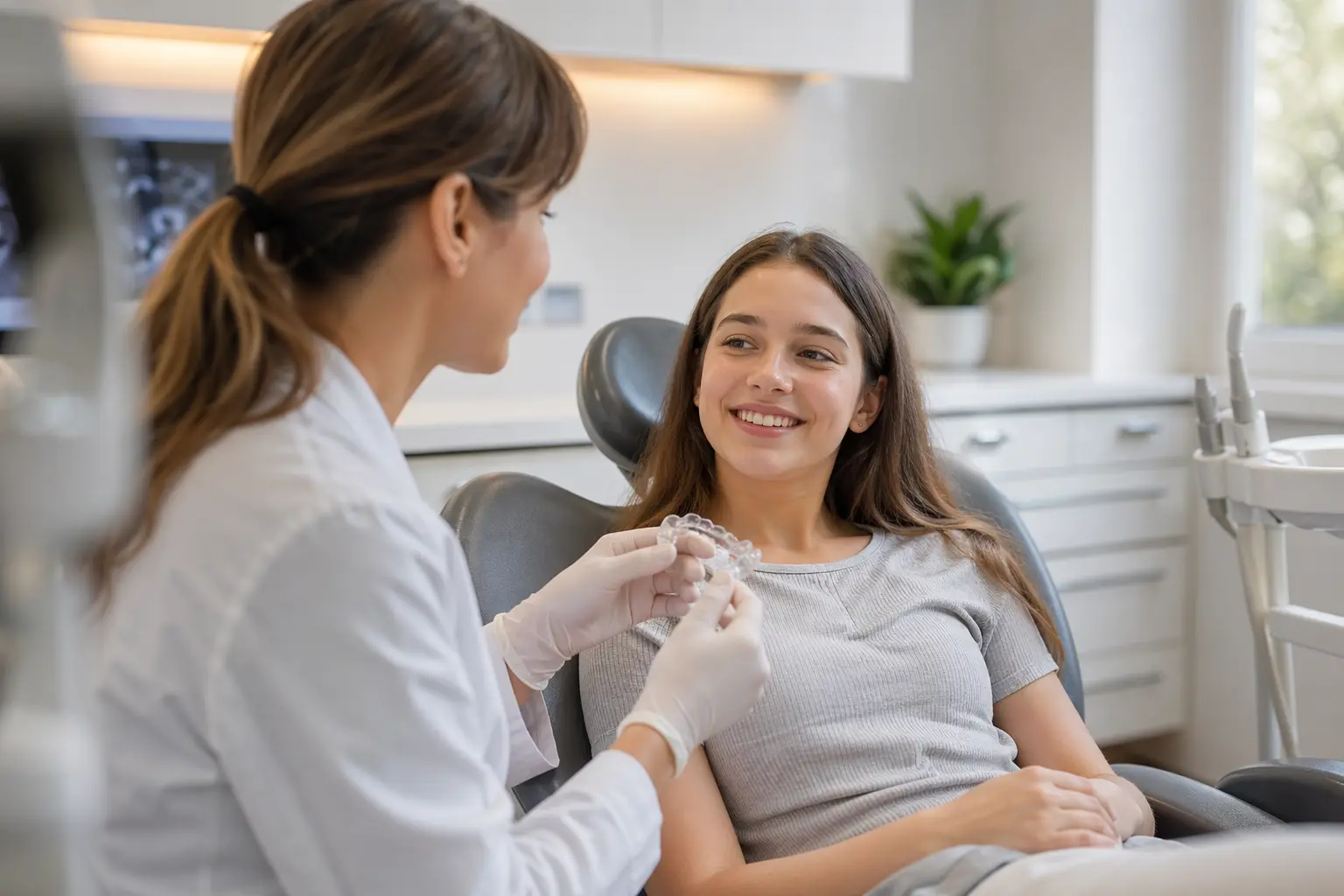
Website Builder for Orthodontists
TL;DR
For orthodontists and small orthodontic practices (1-5 people) looking for a website builder that balances professional appearance with ease of use: this covers what makes orthodontic websites distinct in 2026, which features matter most for patient acquisition, and how to handle HIPAA considerations. Solo offers AI-powered website generation that creates a professional starting point in minutes, though you'll need third-party tools for appointment booking and should carefully evaluate HIPAA requirements for any patient forms.
Why orthodontist websites have specific challenges
Orthodontic practices face digital challenges that general business websites don't encounter. Unlike retail or consulting sites, you're dealing with healthcare regulations, long-term patient relationships spanning 18-24 months, and the need to build trust before someone commits to a $3,000-$8,000 treatment plan. Your website must balance clinical credibility with approachability—too sterile and you'll seem cold, too casual and parents won't trust you with their teenager's smile.
The orthodontic patient journey is also distinct. Parents research extensively before choosing a provider, often comparing three or four practices and reading dozens of reviews. They expect to see before/after galleries, detailed treatment explanations, insurance information, and real patient testimonials. Meanwhile, you're competing not just with other orthodontists but with direct-to-consumer brands like SmileDirectClub, which means your site needs to communicate clearly why in-person expertise matters. Add the technical requirements—HIPAA compliance for any patient data collection, integration with practice management software, and appointment scheduling—and a generic template won't cut it.
What an orthodontist website needs in 2026

| Must-Haves | Nice-to-Haves | Orthodontic-Specific |
|---|---|---|
| • Mobile-first responsive design • Fast loading speeds (under 3 seconds) • SSL certificate • Contact forms • Google Maps integration • Basic SEO setup • Professional imagery • Clear CTAs for appointments | • Live chat integration • Virtual consultation booking • Educational blog • Video testimonials • Insurance calculator • Financing information • Team member profiles • FAQ section | • Before/after gallery • Treatment pages (Invisalign, braces, etc.) • AI-powered smile assessment tools • Age-specific content (kids vs. adults) • Insurance verification forms • Emergency care information • Retainer care guides • AAO member badge display |
According to recent research, orthodontic websites must feature dedicated pages for each treatment type, robust FAQ sections, and compelling doctor profiles to build trust. The most successful practices are also integrating new technologies like virtual consultations and AI-powered assessments to meet patient expectations for convenience.
HIPAA compliance and patient data
If your site collects any patient information—even just a name and email for appointment requests—you need to consider HIPAA implications. The HHS provides specific guidance on website tracking technologies and patient privacy, and violations can result in significant fines.
Solo does not offer a Business Associate Agreement (BAA) and is not suitable for collecting Protected Health Information (PHI). If you need detailed medical history forms, insurance information collection, or treatment progress portals on your website, Solo isn't the right choice. That said, many orthodontic practices use a two-tier approach: a public website (which Solo can handle) for marketing and basic contact forms, paired with a separate HIPAA-compliant patient portal for sensitive data. A basic "request a consultation" form with name, email, and phone number typically doesn't require full HIPAA compliance, but confirm your specific requirements with your practice's legal advisor.
Why Solo works for solo orthodontic practices
Solo's AI-powered website generation suits smaller orthodontic practices that need professional results without a web design learning curve. During onboarding, you describe your practice—"We're a family orthodontic practice specializing in Invisalign and traditional braces for teens and adults"—and Solo generates a complete multi-page site with relevant sections, service descriptions, and professional copy tailored to orthodontics. This isn't just a template swap; the AI understands orthodontic terminology and creates content that speaks to parent concerns about treatment duration, insurance coverage, and results.
The visual editor includes AI-seeded section creation, so when you add a "Services" section, it generates orthodontic-specific content about braces, Invisalign, and retainers based on your practice context, not generic dental copy. At $20 annually, it's priced competitively against Squarespace ($16/mo) while offering more AI assistance than traditional builders. Included hosting, SSL, and custom domain setup removes the technical overhead that often delays practice website launches.
Solo has real limitations for orthodontics worth knowing upfront. There's no native appointment booking—you paste links to your existing scheduling software (like Solutionreach or LocalMed). The blog feature is optional and flag-controlled, so content marketing capabilities vary by deployment. Without a BAA, you cannot use Solo for patient intake forms that collect medical history, insurance details, or treatment preferences. Solo works as your professional storefront that funnels patients to schedule consultations, not a complete practice management solution.
Comparison with alternatives
| Feature | Solo | Squarespace | SmileShop (orthodontic-specific) |
|---|---|---|---|
| Monthly Price | $20 (annual) | $16-$72/mo | $149-$399/mo |
| AI Website Generation | ✓ Full site from business description | ✗ Templates only | ✗ Templates only |
| Orthodontic Templates | ✗ But AI adapts content | ✗ Generic only | ✓ Industry-specific |
| Native Booking | ✗ External links only | ✓ Acuity add-on | ✓ Integrated |
| HIPAA Compliant | ✗ No BAA | ✗ No BAA | ✓ With BAA |
| Before/After Galleries | ✓ Via image sections | ✓ Gallery blocks | ✓ Specialized tools |
| Setup Time | Under 1 hour | 4-8 hours | 2-4 weeks (managed) |
Getting started: a 5-step checklist
- Prepare your practice information before starting Solo's onboarding. Write a clear description of your practice (example: "Modern orthodontic practice serving families in Austin, specializing in Invisalign, traditional braces, and early intervention treatment for children"). List your main services, unique selling points (like same-day starts or interest-free financing), and have professional photos of your office and team ready to upload.
- Set up your domain and professional email first. Buy your domain (like austinsmilealign.com) through a registrar like Namecheap or Google Domains before starting with Solo. Set up professional email (dr.smith@austinsmilealign.com) through Google Workspace or similar—patients trust professional email addresses more than gmail.com addresses.
- Create your site structure focusing on patient journey. After Solo generates your initial site, organize pages to match how patients research: Home → About Dr. Smith → Adult/Teen Treatment Options → Technology & Comfort → Insurance & Financing → Schedule Consultation. Use Solo's AI-seeded sections to quickly build out service pages for each treatment type.
- Add trust signals and compliance elements. Upload your AAO membership badge, any specialty certifications, and before/after photos (with proper patient consent). Add your practice's privacy policy, especially if collecting any patient information. Include emergency contact information prominently. Create a reviews/testimonials section linking to your Google reviews.
- Connect external tools for functionality Solo doesn't provide. Paste your scheduling software link (Solutionreach, SimplePractice, etc.) into Solo's scheduling section. Add your Google reviews widget using Solo's custom code feature (Pro plan). Install Google Analytics and Facebook Pixel for tracking. Set up a separate HIPAA-compliant form service (like JotForm with BAA) for detailed patient intake, linking to it from your Solo site.
How much does Solo cost for an orthodontic practice website?
Solo's Pro plan costs $20 per month when billed annually (or $25 monthly). This includes hosting, SSL certificate, custom domain connection, and AI-powered website generation. Most solo orthodontists find the Pro plan sufficient unless they need multiple sites or extensive blogging.
Can I collect patient forms and medical history through my Solo website?
No, Solo does not provide a BAA (Business Associate Agreement) and cannot be used for collecting Protected Health Information (PHI) like medical history, insurance information, or treatment details. You'll need to use a HIPAA-compliant form service like JotForm with BAA or SimplePractice for patient intake, then link to it from your Solo site.
How does Solo handle appointment scheduling for orthodontists?
Solo doesn't have native appointment booking. Instead, you'll paste your existing scheduling software link (like Solutionreach, LocalMed, or SimplePractice) into Solo's scheduling section, which creates a button for patients to click through to your booking system. This actually works well since most orthodontic practice management systems have specialized scheduling features Solo couldn't replicate.
Can I showcase before and after photos on my Solo website?
Yes, you can display before/after galleries using Solo's image sections and gallery layouts. You'll need to upload your own photos (with proper patient consent) as Solo doesn't generate images. The Pro plan includes Pexels stock photos for general imagery, but you'll want real patient results for credibility.
How long does it take to build an orthodontist website with Solo?
Most orthodontists have their basic site live within 1-2 hours. Solo's AI generates your initial multi-page site in about 5 minutes after you describe your practice. You'll spend another 30-60 minutes customizing content, uploading your photos, and connecting your domain. This is significantly faster than traditional builders that start with blank templates.
Does Solo help with SEO for local orthodontist searches?
Solo provides basic on-page SEO features: customizable page titles, meta descriptions, clean URLs, mobile responsiveness, and automated sitemaps. However, for competitive local orthodontic SEO, you'll need to supplement with: Google Business Profile optimization, consistent NAP (name, address, phone) information, and manual link building to local directories. Solo gives you a solid technical foundation but won't replace active local SEO efforts.
What happens if I need help with HIPAA compliance or orthodontic-specific features?
Solo is best suited for the marketing side of your orthodontic website—attracting new patients, showcasing your practice, and driving consultation requests. For HIPAA-compliant features like patient portals, detailed intake forms, or treatment tracking, you'll need to integrate third-party orthodontic practice management software. Many practices successfully use Solo for their public website while maintaining a separate secure portal for patient data.
Can I add patient reviews and testimonials to my Solo orthodontist website?
Yes, you can add testimonials manually through text sections and quote blocks. For dynamic Google reviews display, you'll need Solo's Pro plan which allows custom code embedding—you can then add a Google reviews widget. Remember to get written consent before featuring patient photos or detailed treatment stories on your website.